
This essay is a book review. It refers to the concise Darwin biography published by Tim M. Berra. Professor Berra is an expert on the life and times of Charles Darwin and his family members. Many heavyweight biographies were published about Charles Darwin, known as the father of the evolution theory who is considered to be one of the most influential persons in the last 200 years.
Professor Berra opens his book by stating that:
“Charles Darwin is among the most influential scientists who ever lived.
We agree with this statement.
The book was published by the Johns Hopkins University Press, Baltimore. 2009, is titled: Charles Darwin The Concise Story of an Extraordinary Man”.
The book is easy and quick to read. It contains many references to Darwin the man, his youth, family and his work. Berra’s popular lecture titled: “Darwin”, was itself a hit in demand in academic circles. More on the book and rich contents is coming down.
With all the hip about Darwin and stories about the Galapagos islands, me and my daughters Hadar and Dafna Lender went on a visit to witness the legendary natural rich and fascinating wildlife and distinctive vegetation that gave Darwin the intellectual material and vigor to craft the Theory of Evolution.
There are way over sixty notable islands in the archipelago. We stayed in four islands: North Seymour, Baltra (where our arrival airport was), Santa Cruz and Isabela Island. The trip was an amazing experience. I brought back 500 photos.
Here are snapshot oddities of what I saw on the Galapagos Islands.
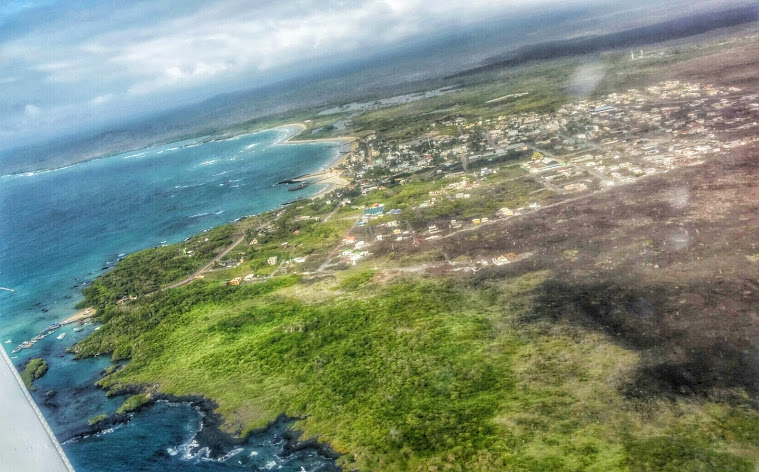
Santa Cruz island seen from above. Puerto Ayora in the center.
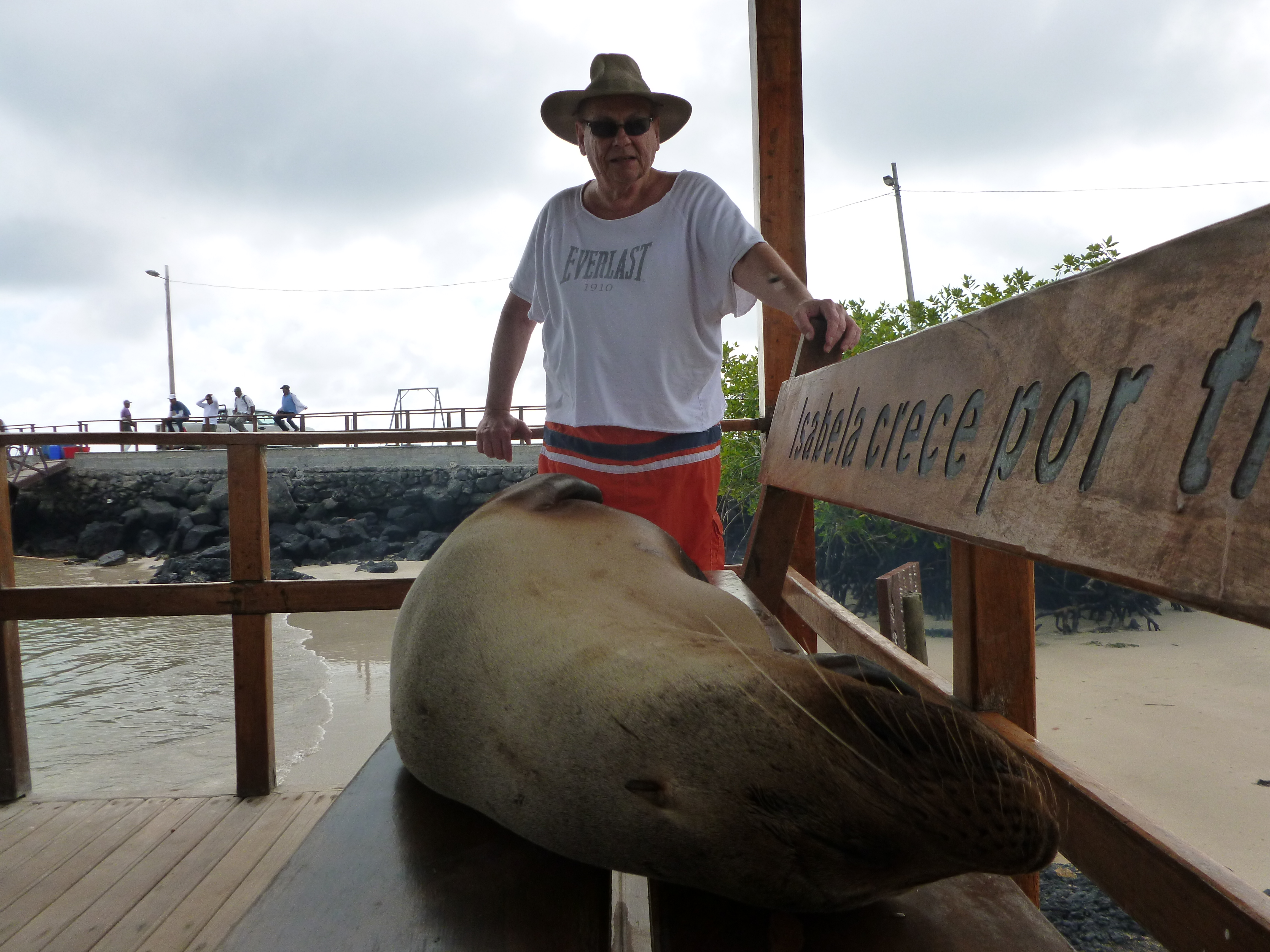
The sea lions are used to humans. He didn’t care. Just took the bench over, for himself.

This large tortoise in Santa Cruz is… really large. The carapaces are different in each island.
Iguanas on Santa Cruz island have different colors as a result of… you guessed it – evolution driven by the need to survive.
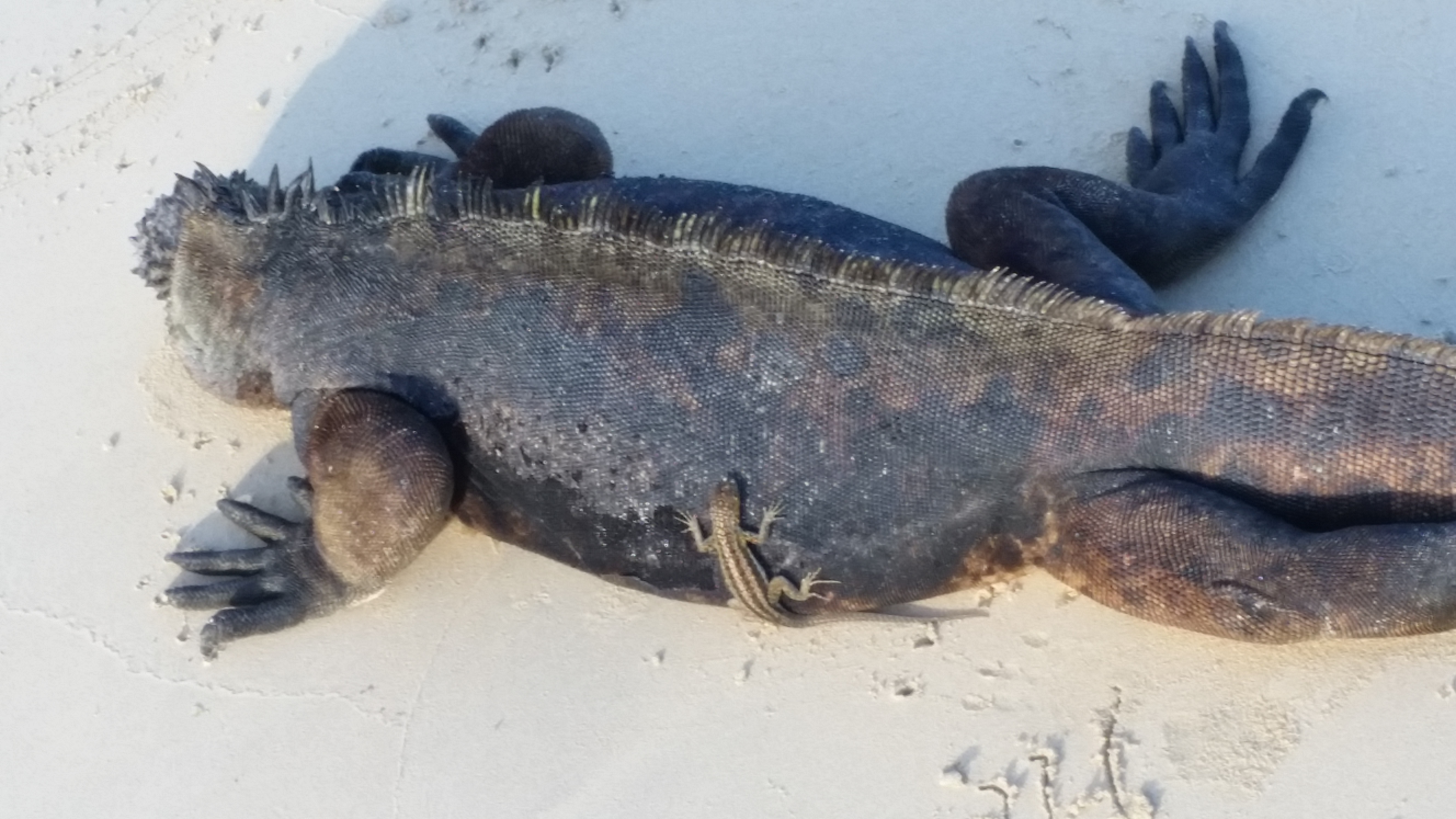
The marine iguanas are blue-gray blending with sea color. Uniquely evolved. A tiny lizard feeds on its skin.
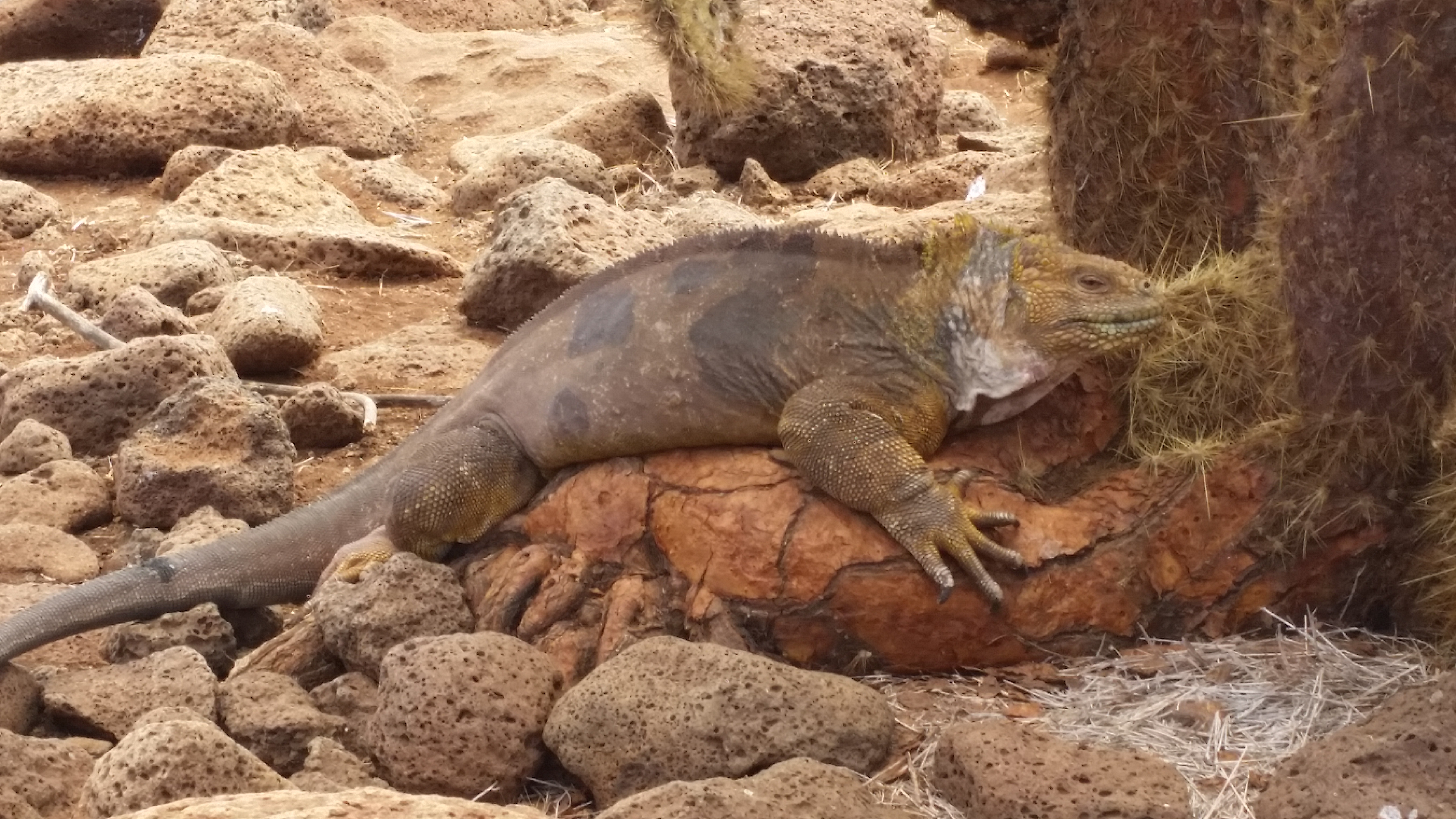
The terrestrial iguanas evolved yellow-gray to blend with the desert colors.
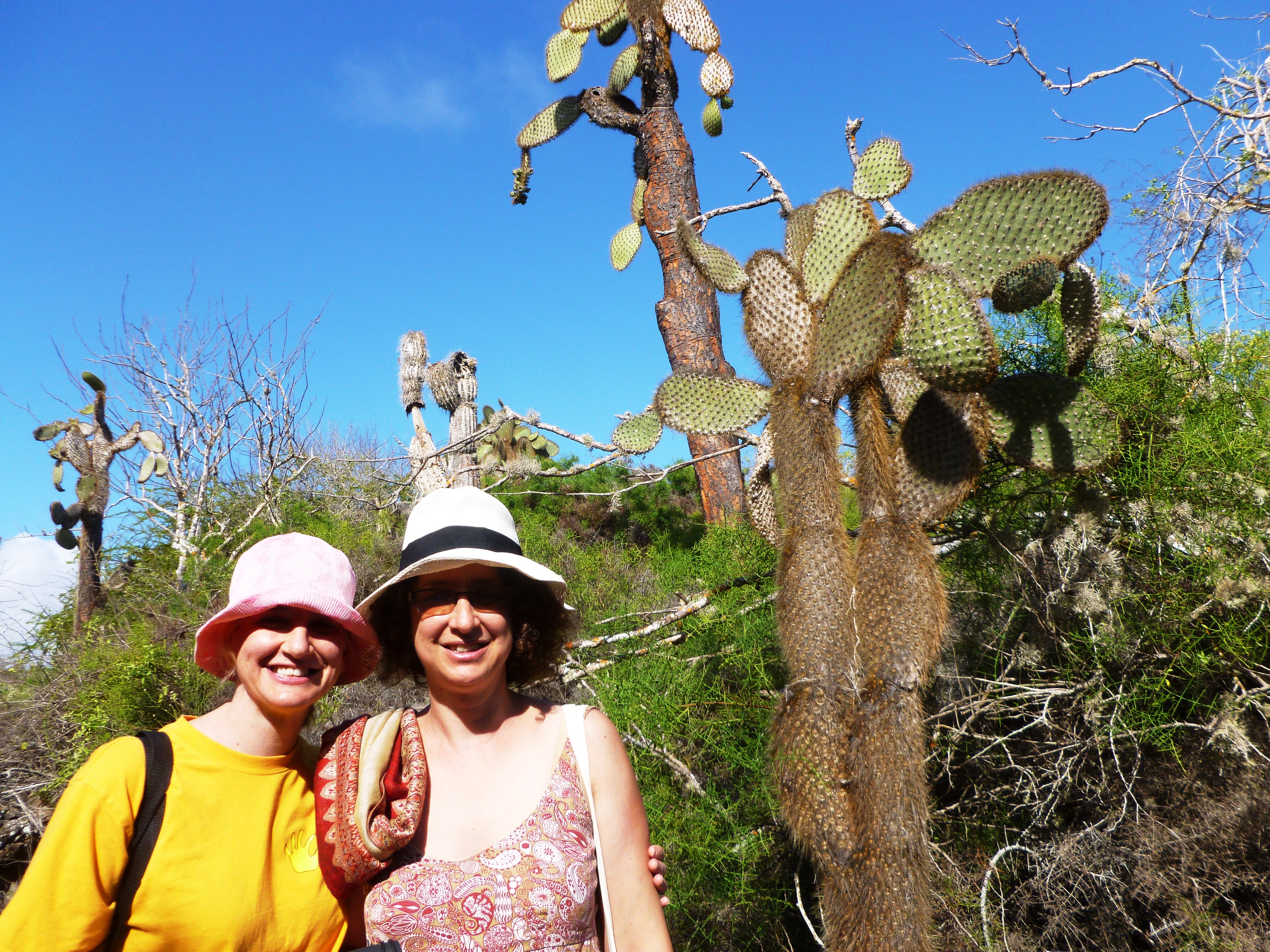
Dafna and Hadar next to giant cactuses.
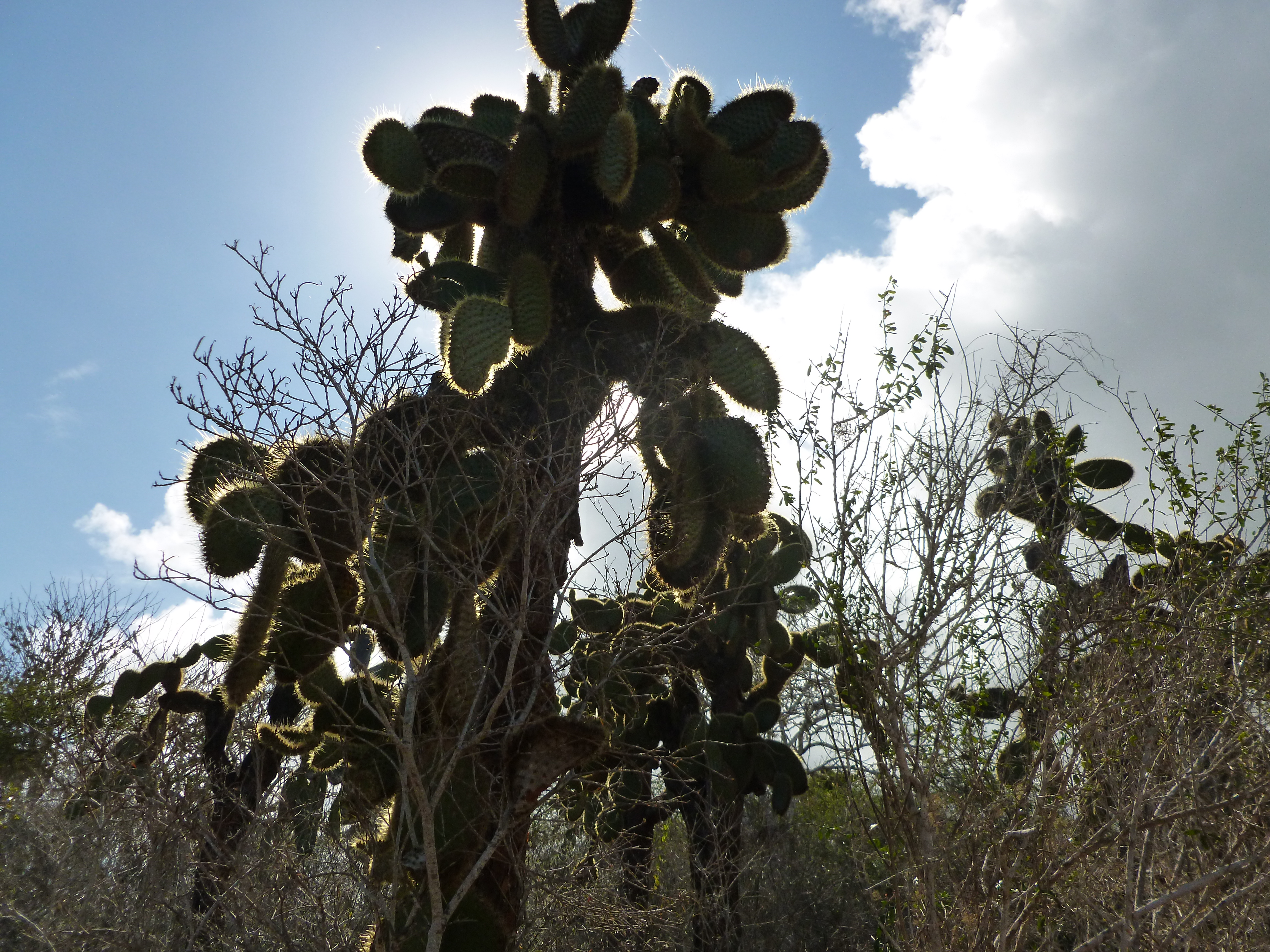
Convoluted cactuses. Typical to the Pacific mixed dry-wet climate. Unique to Galapagos.
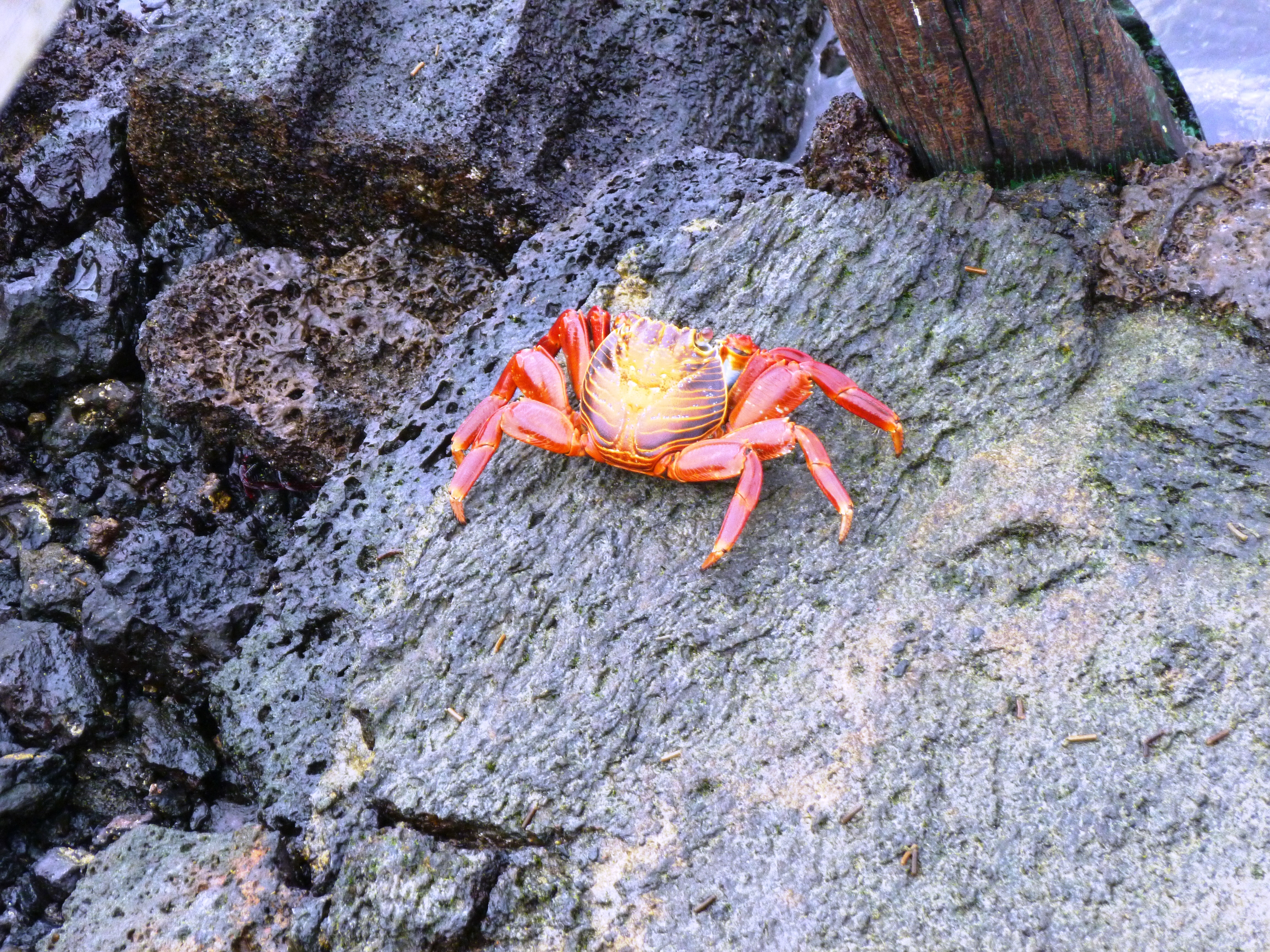
SallyLightfoot. These distinctive crabs are everywhere on the beaches.
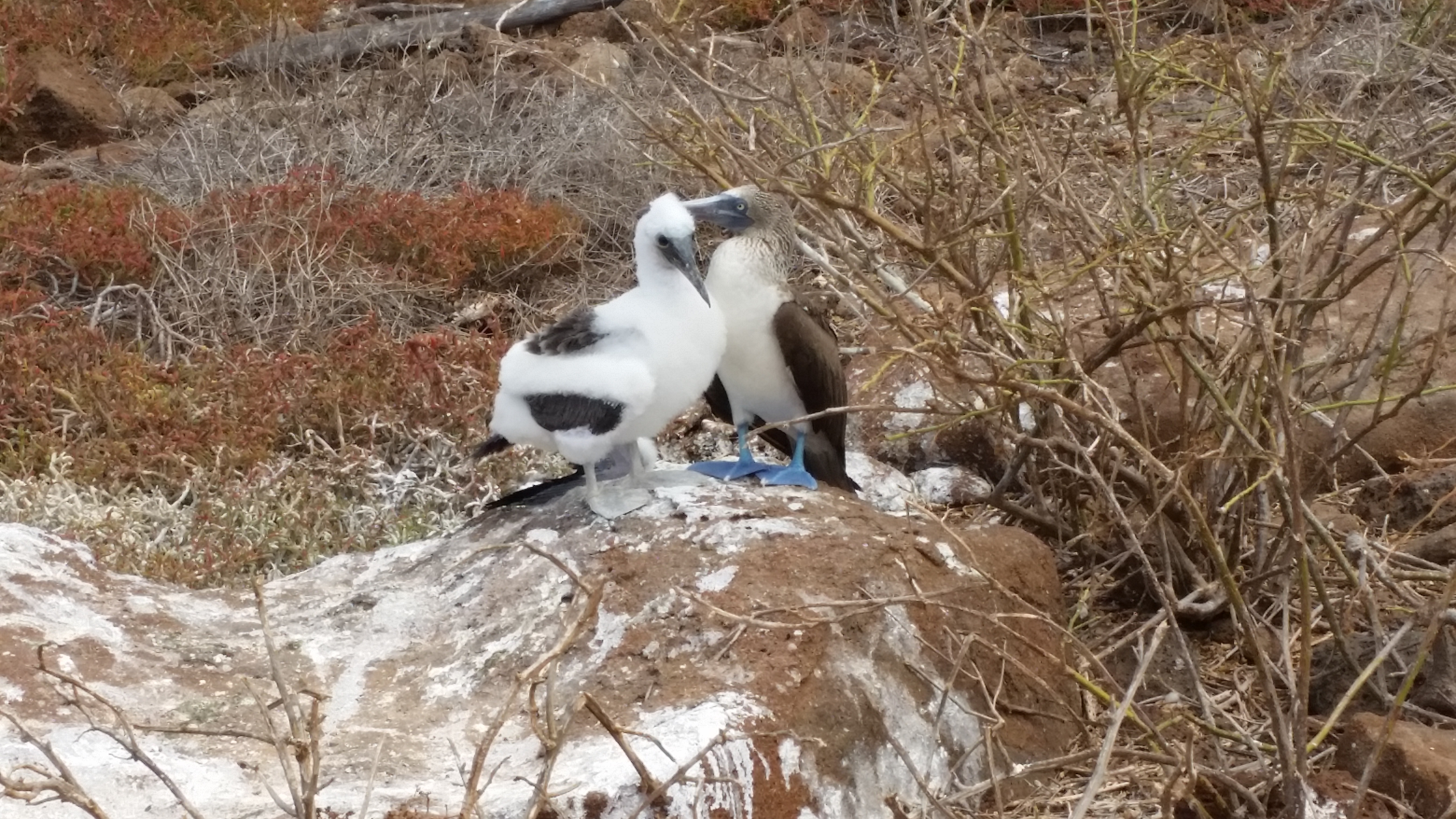
North Seymour Island is known for its unique aviary: Above are a couple of Blue Footed Boobies.
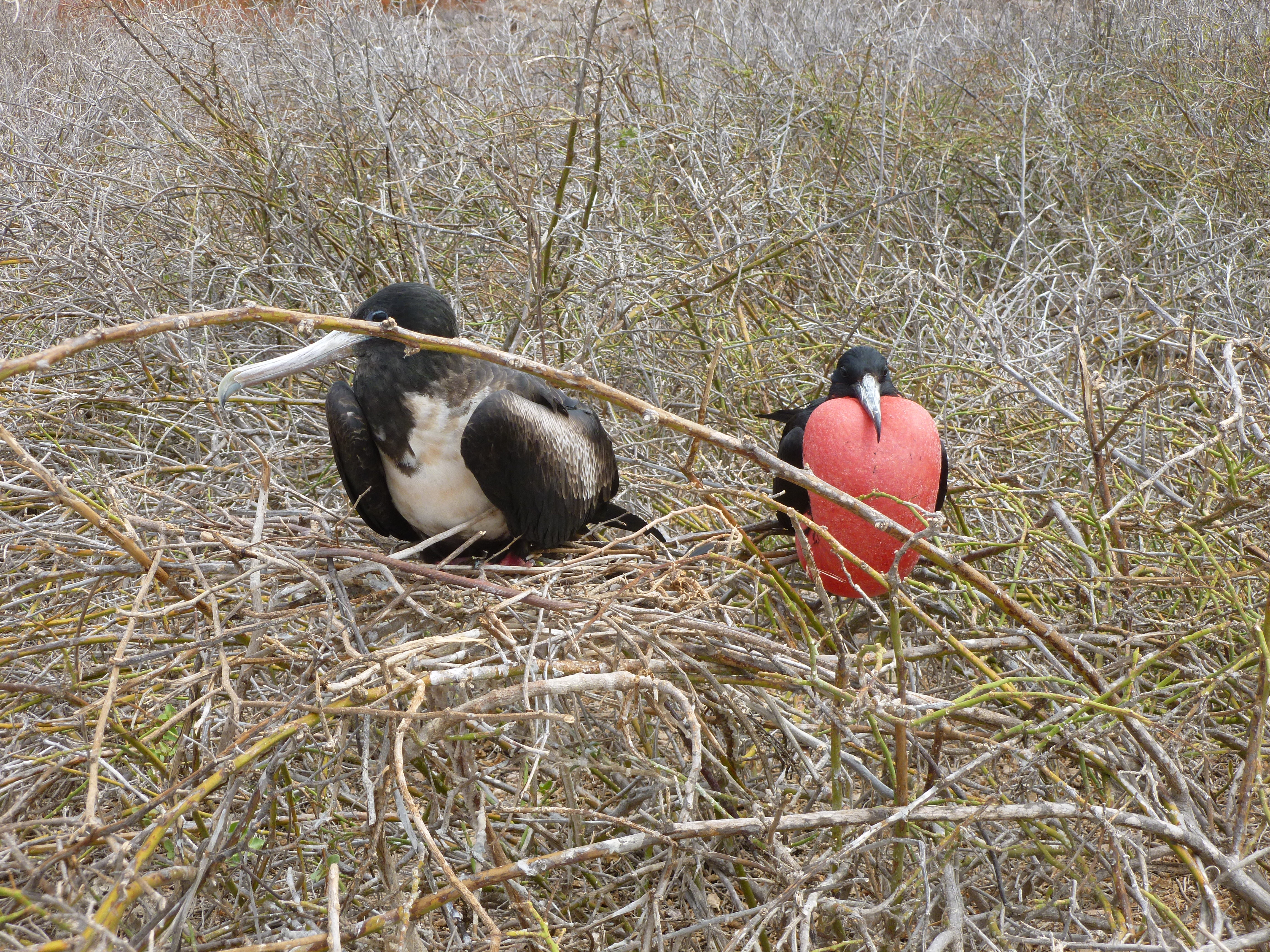
A pair of Frigatebirds nesting on Seymour island.
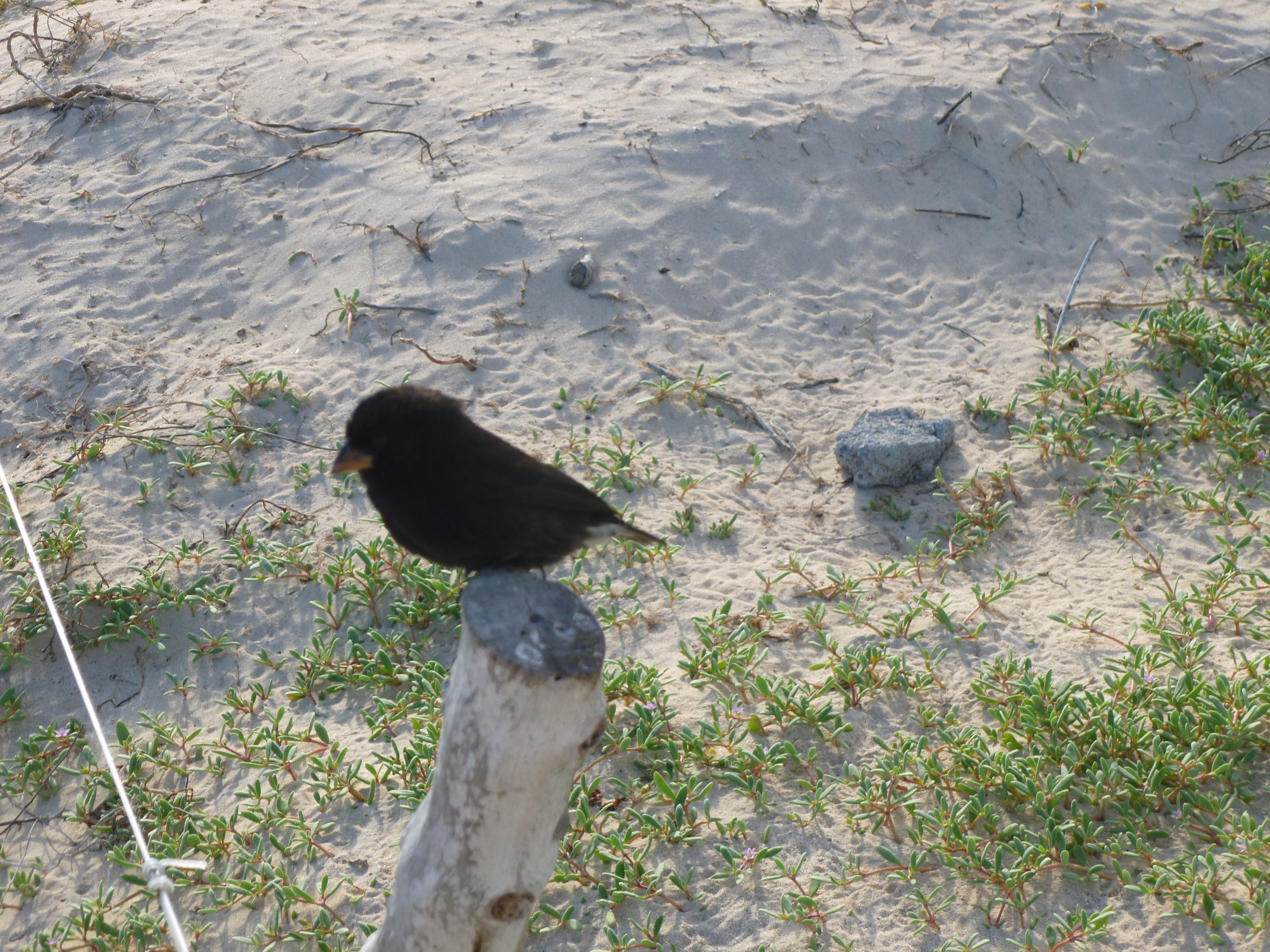
A Darwin finch. Darwin counted 13 different species of this little bird.
# # #
Back to Professor Berra’s literary biographical gem of Charles Darwin. We are told that the young Darwin (age 22-26 years), brought with him from around the world voyage thousands of flora, fauna and other inanimate specimens. Those served him later, at his home in Downe, as “dots”. Darwin endowed with a formidable intellect and sagacity later connected these “dots” and wove them into the magnificent fabric of Theory of Evolution.
Professor Berra best summarizes Darwin’s theory method. Here it is (minor word omissions for even better clarity):
“Darwin’s patience and keen powers of observation led to the realization that there is variation in nature. No two individuals are alike in a litter of puppies, school of minnow hatchlings, or members of same species of barnacles or orchids. The germinations of seeds from the same plant yield variable offspring. Darwin’s genius was to understand that this over-production was related to variation. He eventually came to realization that there is competition for resources in nature and that the variations best adapted to their environment would displace the less favorably endowed individuals.
Since the environment is doing the choosing, he called this process natural selection, as opposed to the artificial selection imposed by breeders. This resulted in descent with modification. Which was his definition… of evolution. Today we have the benefit of genetic knowledge, which was unknown to Darwin… Descent with modification can be explained as a change in gene frequency that is a change in the proportion of a particular gene variant among all the alternative forms of that gene. Natural selection is differential reproduction. In other words, in the same environment, one form leaves more offspring than another form. The environment is the selecting agent.
Darwin had no knowledge of the source of this variation… change in a gene (mutations). Today we understand that genetic variation is produced by mutation, sexual reproduction, chromosome re-arrangement, etc.
So to recap: Evolution is descent with modification (change in gene frequency), brought about by natural selection (differential reproduction), acting on the variations produced by mutations and other sources, with the environment doing the selecting.”
(Tim M. Berra: “Charles Darwin, the Concise Story of an Extraordinary Man”. P. 68-69.)
And the rest is history.
This book should be teaching material in high schools.

We sure been there and done it.
SUBSCRIBE to this blog. It’s FREE.
www.mandylender.com www.mandylender.net www.attractome.com www.lendercombinations.com
Tags: #CharlesDarwin #descentofman #originofspecies #galapagos #TimBerra #theoryofevolution #biography #travelwriting #bookreview

 Mandy Lender