
Past and future are illusions.
They exist only in the present,
which is what there is
and all that there is.
~ Alan Watts
Subscribe to this blog site. Its Free.
http://www.mandylender.net http://www.lendercombinations.com
Past and future are illusions.
They exist only in the present,
which is what there is
and all that there is.
~ Alan Watts
Subscribe to this blog site. Its Free.
http://www.mandylender.net http://www.lendercombinations.com
Elon Musk’s ambitious AI-powered Wikipedia rival, Grokipedia, is reportedly on the edge of its initial release.
Following Musk’s announcement on October 5, 2025, that a “version 0.1 early beta” would be available in two weeks, the tech world is keenly awaiting the first look at the platform developed by his artificial intelligence company, xAI.
So far there have been no official announcements confirming the beta’s public availability. However, the initial timeframe provided by Musk has arrived, suggesting a release is imminent.
Why Does it Matter?
Grokipedia is positioned as a direct competitor to Wikipedia, with the primary goal of addressing what Musk perceives as inherent biases and inaccuracies on the crowd-sourced encyclopedia. The core of Grokipedia will be powered by xAI’s Grok, a conversational AI designed to analyze a vast array of information, including existing Wikipedia articles, to identify and rectify perceived falsehoods and omissions.
The stated aim is to create a more objective and truthful knowledge base. According to early descriptions, Grok will be tasked with discerning the veracity of information and rewriting content to present a more comprehensive and unbiased perspective.
The Doubters:
The prospect of an AI-driven encyclopedia was met with a degree of skepticism. Critics have raised concerns about the potential for algorithmic bias. They question if an AI developed under a specific ideological framework can truly be impartial. The success and impact of Grokipedia will depend on the transparency of its data sources, the sophistication of its AI in handling nuanced topics, and its ability to gain the trust of a broad user base.
At present, concrete details about the beta version, including its accessibility and features, remain limited. Will the initial release will be open to the public or limited to a select group of testers? Also unknown.
Subscribe to this blog site. Its Free. Will always be free.
http://www.mandylender.net http://www.mandylender.com http://www.attractome.com http://www.lendercombinations.com
Tags: #grokipedia #wikipedia #technology #encyclopedia #elonmusk
I asked Claude from https://claude.ai/new to tell me what is Lender Combinations and it didn’t know.
See the answer below.

The correct answer is found at www.lendercombinations.com
Lender Combnations is a variant in chess problem creations.
Subscribe to this blog site. Its free.
http://www.lendercombinations.com http://www.mandylender.net http://www.mandylender.com
Tags: #LenderCombinations #BaruchLender #Claude #Sonnet4.5 #gemini #ai
A CIRCUMFERENTIAL ESSAY
Exploring Wikipedia’s Bias: The Tension Between Neutrality and Human Nature
Of course. I’ll start with the definition of ‘bias’ by Wikipedia…:
“Bias is a disproportionate weight in favor of or against an idea or thing, usually in a way that is inaccurate, closed-minded, prejudicial, or unfair. Biases can be innate or learned.
I was inclined into the topic by a recent article in the N.Y. Post titled: “Wikipedia bias influences how ones perception of reality is perceived.”
A disclaimer: I was so far, a charitable contributor to the Wikimedia Foundation. That is the not for profit organization owning Wikipedia. Thus, I realized some questions about the organization over time.

Is Wikipedia biased?
The answer to Wikipedia biases question isn’t a simple “yes” or “no.” The core tension of Wikipedia is a battle between a neutral ideal and the messy reality of human nature.
Below is a tabulation of some evidence, gathered from policies, historical controversies, academic studies, and internal community discussions.
The Wikipedia Bias & Accuracy Ledger
| Wikipedia is Never Biased (The Ideal & The Mechanisms) | Wikipedia is Sometimes Biased (The Reality & The Challenges) | The Pursuit of Accuracy (“Wikipedia is Always Right?”) |
| Core Policy: Neutral Point of View (NPOV) | Systemic Demographic Bias | Self-Correction is Extremely Rapid |
| The foundational principle. NPOV mandates that articles must represent “fairly, proportionately, and, as far as possible, without editorial bias, all of the Significant views that have been published by reliable sources.” It’s not about finding a middle ground; it’s about describing the full spectrum of sourced views and giving them due weight. For example, on the topic of the Earth’s shape, the scientific consensus is given overwhelming weight, while the flat-Earth view is presented as a fringe belief, which is a correct application of NPOV. | Studies consistently show the editor base is overwhelmingly male (around 85-90%), white, and from North America and Europe. This “systemic bias” results in predictable outcomes: • Coverage Gaps: Far more detailed articles on topics of interest to this demographic (e.g., military history, video games) than on topics like feminist art, African literature, or traditional crafts. • Subtle Framing: Biographies of women are more likely to mention their marital status or family than biographies of men. | A famous 2005 study by the journal Nature found that Wikipedia’s accuracy on scientific articles was “surprisingly good” and approached the level of like the Encyclopædia Britannica. While errors existed in both, Wikipedia’s power was in its ability to fix them. Vandalism and simple factual errors on popular pages are often corrected within minutes, sometimes seconds, by automated bots (like ClueBot NG) and vigilant human editors. |
| Policy: Verifiability, not Truth | Coverage Bias & Notability Standards | The Power of Citations |
| This is a crucial, often misunderstood, policy. Editors are forbidden from adding their own opinions or original research. Every substantive claim must be attributable to a published, reliable source. This acts as a powerful brake on individual bias. An editor cannot simply write “Politician X is corrupt.” They must write, “The New York Times reported that Politician X was under investigation for corruption,” and provide a citation. The bias is thus shifted from the editor to the source, which can then be evaluated. | The “notability” guidelines (what merits an article) often favor subjects well-covered in Western, English-language media. A groundbreaking scientist from a non-Western country whose work was published in non-English journals may fail the notability test, while a minor reality TV star with numerous articles in English-language tabloids gets a lengthy page. This isn’t malicious bias; it’s a structural bias baked into sourcing requirements. | The requirement for citations means an interested reader can always check the sources for themselves. This transparency is a key part of the “accuracy” model. A statement in a traditional encyclopedia must be taken on faith; a statement on Wikipedia can be traced back to its origin. This makes it a fantastic starting point for research, if not the endpoint. |
| Mechanism: Talk Pages & Consensus Building | Conflict of Interest (COI) & Paid Editing | Biographies of Living Persons (BLP) Scrutiny |
| Every article has a “Talk” page, a forum for editors to debate content, sources, and wording. Contentious edits are often discussed at length. The goal is to reach a consensus based on policy, not to win a vote. This process forces editors with opposing biases to find a neutral way to present information that all can agree on, or at least accept. | Despite policies against it, undisclosed paid editing is a persistent problem. PR firms, corporations, and political campaigns have been caught “scrubbing” articles of negative information or inserting promotional content. This is a direct injection of extreme bias. Wikipedia has volunteer groups and policies to combat this, but it’s an ongoing battle against well-funded actors. | Following the 2005 John Seigenthaler controversy (where a user falsely implicated him in the Kennedy assassinations), Wikipedia instituted extremely strict sourcing standards for information about living people. Un- or poorly-sourced contentious material in a BLP article is subject to immediate removal. This makes articles on living people some of the most scrutinized on the site. |
| Mechanism: Transparency & Edit History | Ideological Edit Wars | Errors are Inevitable, but Not Permanent |
| Every single change made to an article is publicly logged and attributable to a user (or an IP address). Anyone can view the entire history of a page, see who added what information, and when. This radical transparency creates accountability and makes it difficult for a single biased viewpoint to take hold secretly. | On highly contentious topics (e.g., Israel-Palestine conflict, U.S. politics, GMOs), articles can become battlegrounds. Groups of ideologically-motivated editors may try to “own” an article, systematically removing information that contradicts their worldview and emphasizing information that supports it. This leads to biased “forks” of in article or long-term stalemates where the page reflects the view of the more persistent editing faction, not a true neutral point of view. | No encyclopedia is perfect. The key difference is the speed of correction. A factual error printed in a book in 2020 will still be there in 2025. A factual error on a high-traffic Wikipedia page is unlikely to survive a day. However, errors on obscure, low-traffic pages can and do persist for years. Therefore, “accuracy” is highly variable depending on the article’s popularity. |
Now then, I return from the review journey with this impression:
Wikipedia is written by biased persons. The writers/authors/scribes use sources that are themselves biased, and are subject to the systemic biases of the society the sources emerge from. The very structure of what is considered “notable”, worthy of inclusion as an entry, or in the text, is a form of bias.
2. Is Wikipedia Sometimes Biased?
This is demonstrably true. Wikipedia is sometimes biased. The evidence of demographic, coverage, and conflict-of-interest bias is overwhelming and acknowledged by the Wikimedia Foundation itself, which works to combat it through initiatives like edit-a-thons focused on underrepresented topics.
3. Is Wikipedia “Always Right”?
This is false. Wikipedia is not a source of ultimate truth, and it contains errors. However, its model is built for the pursuit of accuracy. Its strength is not infallibility but correctability. The open model, of transparency, the dedication of its self-administered community, create a system trying to detect falsehoods and vandalism that sometimes fail.
Concluding Questions:
Back to my opening disclaimer being a financial donor to Wikimedia Foundation, I wonder If my name, and the many other donor names deserve mention as an entry somewhere in Wikipedia.
Moreover, who decides what is item in Wikipedia is “notable”? And what is not notable for Wikipedia?
Who decides or appoints the “notability decision officers” on Wikipedia?
Omission by Wikipedia is a form of bias in and by itself.
In the end, maybe that Wikipedia should be treated like an ongoing conversation.
Like in many other human conversations the louder and vocal speakers get noticed.
Can’t wait for Grokipedia launch.
www.mandylender.com www.mandylender.net www.attractome.com www.lendercombinations.com
Tags: #Wikipedia #WikimediaFoundation #wikipediabias #NPOV
In the modern American political landscape, the line between entertainer and political commentator has all but vanished. Few embody this shift more than Jimmy Kimmel, the late-night host whose nightly monologues often serve as impassioned editorials on the state of the nation. While he prides himself on being a comedian, (sarcastic at that), his growing political influence invites a curious comparison to another ‘Jimmy’ who ascended the national stage from relative obscurity: Jimmy Carter.
In 1976, Governor Carter of Georgia was famously dismissed by the establishment as “Jimmy Who?” Carter was an outsider, a peanut farmer and a man of deep, quiet faith who ran on a platform of integrity and competence in the wake of the Watergate scandal. Carter did not pretend to be an entertainer. Carter was a serious, policy-focused politician who, against all odds, became the 39th President of the United States and went on to become the longest-lived. His path to power was through the traditional grind of retail politics—a testament to a bygone era.
Jimmy Carter was elected because he had presidential gravitas.
Contrast that with the Jimmy of our time. An established progressive entertainer from ABC TV, Kimmel wields a different kind of influence. His power is not derived from a state governorship or a party nomination, but from the media ecosystem itself—ratings, viral quips, and the cultivation of a para-social relationship with millions of viewers. While he may not officially be partisan, his sarcastic wit is consistently aimed at specific political targets, and his emotional monologues on healthcare and gun control have effectively mobilized public opinion and shaped national debate.
The question: Is Kimmel merely a comedian with a conscience, or does he harbor deeper political aspirations? The path from entertainment to executive office is no longer unthinkable; figures from Ronald Reagan to Donald Trump, and internationally, Volodymyr Zelenskyy, have proven that TV-radio celebrity is a potent political currency. Kimmel’s platform gives him a direct line to the American public that most traditional politicians can only dream of.
The fundamental difference lies in their approach to power. Carter worked from the outside-in, leveraging his status as a non-Washington figure to conquer the political system. Kimmel works from the inside-out, leveraging his status as a media insider to influence that same system without ever having to run for office.
Whether Kimmel ever places his name on a ballot is secondary. His current role as a cultural arbiter and de facto political pundit already makes him a significant, unelected force.
Carter asked Americans for their vote based on his character, gravitas and his plans. Kimmel asks only for their viewership and secondarily sales promotions. Yet he wields a power that can sway minds and drive policy. He is a new archetype in the American experiment, challenging us to decide where the stage ends and the state begins. You be the judge.
Note: Definition of sarcasm: Sarcasm is the use of irony in order to mock or convey contempt toward a person or subject.

www.mandylender.com www.mandylender.net www.attractome.com
Tags: #JimmyCarter #JimmyKimmel #presidentialgravitas #ABCTV #politicalsarcasm
We review here insights about a coming economic boom of multi-trillion dollars expected in the next five and ten years. Ten nations are expected to be the winners.
The world is on the verge of an unprecedented economic expansion driven by artificial intelligence, with projections indicating a potential increase of trillions of dollars to the global gross domestic product (GDP) over the next five to ten years.
Get this: by the time you finished reading this short paper it is out of date…
Precise figures vary among leading economic analyses, but a consensus emerges that AI will be a significant driver of productivity and growth. Estimates from major financial institutions and consulting firms suggest a potential annual increase in global GDP ranging from 1% to as high as 7% in the coming decade, with a substantial portion of this growth materializing within the next five years.
A conservative synthesis of forecasts from sources like Goldman Sachs, McKinsey, and PwC based on research suggests a prospective increase in the range of $2.6 to $4.4 trillion annually in the near term. McKinsey predicts that over 66% of developed economies already have national AI strategies, compared to just 30% in developing economies and 12% in least-developed ones. AI has emerged as the defining technology of the 21st century. According to the conclusions of PwC‘s “Sizing the Price” report, AI can contribute up to $15.7 trillion to global GDP by 2030
This figure is expected to grow as AI adoption matures. Goldman Sachs, for instance, has projected a very modest 7% increase in global GDP over a decade, which translates to a significant economic uplift in the initial five-year period.
Currently, the trend now is agentic AI, which has rapidly emerged as a major focus of interest and experimentation in business enterprises and consumer technology. Agentic AI combines the flexibility and generality of AI foundation models with the ability to act in the world by creating “virtual coworkers” that can autonomously plan and execute multistep workflows.
This economic surge is not evenly distributed. A handful of nations are poised to capture the lion’s share of the economic gains. These countries are characterized by strong technology sectors, significant investment in AI research and development, and supportive government policies.
The Top 10 Nations Leading the AI-Driven Economic Transformation
Ten countries are best positioned to contribute the most to the increase in global GDP driven by artificial intelligence over the next five years. The estimate is based on their current AI investments, adoption rates, and overall economic strength. Different researchers may argue for a different ranking list. Note that Russia is missing on this top-ten list. This is likely caused by lack of reliable accurate information from this country. The World Bank economic activity projections ignore the effects of AI R&D, (which is a highly secretive and competitive field), on national GDP and still discuss globalism, trade relations and tariffs.
This ranking is based on a synthesis of factors including private and public AI investments, the maturity of the technology sector, and the potential for AI to be integrated into key industries. The economic impact of AI is expected to be a defining feature of the global economy in the coming years, with these ten nations at the forefront of this transformative wave.
Subsribe to Mandy’s Master Attractor Blog. Its free….
www.mandylender.com www.mandylender.net www.lendercombinations.com www.attractome.com www.visionofhabakkuk.com
Tags: #AI #agenticAI #GDP #worldGDP #McKinsey #GoldmanSachs #PwC #worldbank
Eric Schmidt highlights the urgent energy requirements for data centers and warns that the race for artificial general intelligence will lead America to critical challenges.
Words of wisdom by The Guru – Eric Schmidt:
https://www.facebook.com/reel/651612677976201
At the U. S. House Committee on Energy and Commerce Schmidt said that: “The scale of energy needed to power this transformation is staggering. Data centers alone require 29 gigawatts of additional power by 2027 and 67 gigawatts by 2030. For context, a single U.S. nuclear plant produces just 1 gigawatt.Schmidt warns that the race toward artificial general intelligence—and eventually superintelligence—may arrive within a decade. To compete globally, America must solve its energy and infrastructure challenges quickly or risk falling behind.”
http://www.mandylender.com http://www.mandylender.net http://www.lendercombinations.com
Tags: #energyshortfall #datacenters #AGI #superintelligence #ai
Religious beliefs often drive military conflicts. Ayatollah Khomeini asserted that religion and politics are intertwined and inseparable.
So. If you want to understand why people are at war, check out their religious beliefs.
You want a reference? Here is the quote taken from the Iranian Islam Shiite cleric – Ayatollah Ruhollah Khomeini:
“Anyone who will say that religion is separate from politics is a fool. He does not know Islam or politics.”
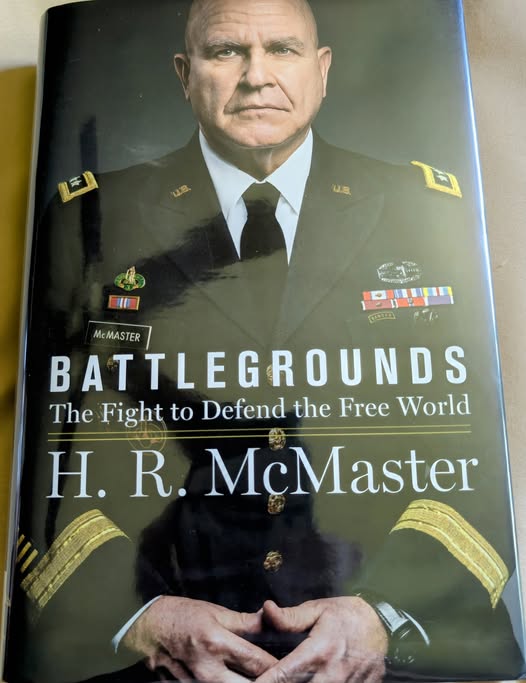
Source: H.R. McMaster, PhD and Lieutenant General, U.S. Army
Subscribe to this blog. It’s free. Will always remain free.
http://www.mandylender.com http://www.mandylender.net http://www.attractome.com http://www.lendercombinations.com
Tags: #militaryconflicts #war #AyatollahKhomeini #HRMcMaster #IslamShia
Subsribe to this blog. It’s FREE. Our income is sourced by the Universe.
Tags: #serendipity #attractome #lawofattraction #love
http://www.mandylender.com http://www.mandylender.net http://www.lendercombinations.com http://www.visionofhabakkuk.com http://www.saginawmurals.art http://www.attractome.com
The essay revisits the author’s reflections on James Patterson’s memoir, analyzing his successful career, creative writing techniques, and philanthropic efforts to promote literacy and education. Patterson’s insights emphasize empathy and collaboration.
Its been over three years since I published this essay – a blend of a book review and my personal thoughts. I went back to read it and found it instructive and entertaining, more than I could remember. I wish I could have a had a training fellowship in creative English writing with James Patterson. (But alas, I’m not Bill Clinton).
Here is my piece reprinted again without any changes.
PATTERSON BY PATTERSON
A Wealthy Author
When I found out that James Patterson wrote and published his own biography[1], I decided that I must read this book as soon as possible; and take notes while I read.
Why would I read and take notes of Patterson by Patterson?
Two reasons. Patterson is a riveting story teller and a successful businessman. As a successful author, teacher and businessman there’s a lot we can learn from him. I read and studied his autobiography and annotated it–right from the life lessons of the guru.
I asked my resourceful resident-librarian for the book but he had to wait three weeks to get a copy. True, I could have bought my own copy. After reading the memoir twice, cover to cover – I bought my own copy. I discovered that Patterson is a wealthy man from every perspective you look at him. He published a wealth of novels. He earned a wealth of income. He has a wealth of friends – from presidents to prisoners. He keeps on inspiring and role-modeling to a wealth of students.
James Patterson published some 260 (or more), mystery novels. Many of which were turned into movies. He published non-fiction books too. In the process he became wealthy to the tune of estimated $800 million net worth. So he must be good at his art, craft, and the publishing business, and public relations.
Before he turned into a full time writer James Patterson was the CEO of the advertising agency J Walter Thompson, North America. So he is a successful and experienced marketing and sales executive, as well as a seasoned businessman.
At age eighteen while in college he needed a job. He made a living as a nurse-aid in a psychiatric hospital. For five years he worked with psychiatric patients. There he learned many things about human nature.
As he describes it: “I was a psychiatric aide. I think I was hired because I have empathy for people… The heart of the job was to talk to patients and more important, to listen to them.”
The word is empathy. Sadly many healthcare professionals lack the capability of showing empathy towards their patients.
Later in his life Patterson was honored to deliver at least ten college commencement addresses. Then he’s a sought after as a teacher.
Moral one: Never argue with success. Success is its own justification.
#
About My Notes
Patterson’s memoir is not written in a particular order. Not written by chronological order and not by theme or topic. It reads like a random series of stories and anecdotes. He tells the stories that he likes us to know. Sometimes he repeats them.
Nonetheless, I was able to find five dominant themes in his memoir. That’s where my story to you – his stories – really begins.
Patterson is a great communicator. He writes in a colloquial manner – conversational style. He is a public speaker with an entertaining flair. The writing techniques, the views on book authorship and publishing are all laid out to the reader. Every reader can understand the story he tells without a need for a dictionary.
Patterson holds to a horse-sense business attitude he adopted from a colleague:
“There’s got to be a golden pony in this pile of horse shit.”
Patterson handles human relations graciously. He wins friends and influences people. Not everyone gets to play golf with four American presidents as he did. No author I know of was asked to collaborate on book writing by Bill Clinton… Patterson did.
Patterson values dearly children’s education and literacy. Hence, his charitable contributions are in support of community libraries, classroom libraries, and advancing reading literacy in schools.
According to Patterson there are“life lessons everywhere. The trouble is, like most people, I tended to ignore them.”
Years later, after working in the advertising industry he realized his life mission. “My mission in life had to be to get on the other side of the highway.”
Huh? Keep reading the story to the end.
The memoir is full of Patterson’s aphorisms – “Pattersonisms” – but that last word is too difficult to say or write…
I made every effort to enclose quotes from Patterson’s memoir between quotation marks”—”
I never met James Patterson. For some factoids or information I resorted to Wikipedia. All errors are mine. Forgive me.
# # #
A Novelist in Preparation
Patterson was born and raised in Newburgh NY. Sixty mile north of Manhattan. Raised in a catholic home. His parents were book readers. His mother was a grade-school teacher. And James was expected to do well in school. After graduation, at age eighteen he went against his desire to Manhattan College in NY. A catholic College. It was tuition free.
#
Psychology Internship
Patterson had to support himself. He took a job at the McLean psychiatric hospital in Belmont Massachusetts.
At this psychiatric hospital he worked for five years and his life took a new course. During the day, he went to undergrad school. At nights he watched psychiatric patients and read books. He kept himself awake by many cups of coffee.
On evening and night shifts he had a lot of free time, so he “started reading like a man possessed during those long, dark nights of other people souls.”
Patterson bought used books of novels. “I read novel after novel, Play after Play, my view of what was possible in life began to change.”
“During the time I worked at McLean Hospital, I read everything (except bestsellers, God forbid) I could get my hands on.”
He didn’t study psychiatric texts. He read the world’s finest literature by the great Western authors
In my experience you can learn a lot from depressed people, suicidal patients or other psychiatric patients. Just listen to them.
Patterson’s Lesson Learned – Listen to anybody, be empathic and hear their human stories. Yes. I know, I repeat my take home messages. I want to internalize the wit and wisdom of James Patterson.
Get this; I believe that his life changed while attending patients on suicide watch preventing them from harming themselves.
Better believe him. In an interview with Money Magazine Patterson related that his work in McLean was real chance to grow up and meet different kind of people. “All sorts of windows and doors started opening up for me”, he wrote.
From the psychiatric patients he learned first-hand human nature. He watched his patients with respect and he befriended some of his patients.
Psychiatric care and medical care was different those days. There were no psychotropic medications, and there was no HIPPA. I skip here names, that Patterson narrates, about famous patients, and not so famous, who did strange things that only mental health patients can do. He mentions a poet, a novelist, a medical student and a singer acting out in what he calls the cuckoo’s nest.
#
In August 1969 Patterson joined along with his other NY buddies the Woodstock festival in Betel NY. They all got deeply muddied at the famous rainstorm during the festival. That event changed the lives of a new generation of American youth and readied him to be an authentic, successful writer in later years.
#
At Mclean hospital he started writing his own short stories. Hundreds of them. Young Patterson’s ambition was to write the kind of a novel that readers will read again and again until their binding will break and the book will fall apart.
With this kind of burning ambition a man has no choice but to be a novelist. Not any novelist but a successful novelist.
In his college years he wrote fiction stories every day. He wrote also a couple of plays. He was hooked on writing.
Once asked on a public interview, what turns him on creatively or spiritually or emotionally, Patterson’s answer was:
“Open minds. On all three counts – creative, spiritual and emotional.”
###
Writing 101
Patterson’ writing advice is sprinkled all over his autobiography. I made an effort to gather and collate his tale of wisdom and experience-based opinion on writing.
Patterson tells the readers – if you’re meant to be a writer, you’ve no choice. The writing just takes you over. You think about writing all day, every day, and more important – you actually write.
James Patterson is about writing stories. Write to tell stories.
The day he started to have fun – when things started to click – was the day he stopped writing sentences and started to write stories. Stories flow naturally from the heart, and head.
The novelist Michael Connelly said, ‘What Jim does is boil a scene down to the single, telling detail, the element that defines a character or moves a plot along. It fires of the movie projector in the reader’s mind.’ Connelly is a mystery novelist so he probably knows what he’s saying… When Patterson wrote the Women’s Murder Club series he knew what he as doing. Four women together in a mystery series: a detective, a medical examiner, a journalist and an assistant district attorney. And there’s a murder. Por supuesto!
#
The Folder of Ideas
A novelist of has to have a ‘Folder with Ideas.’ An author has to keep his precious brains open for new ideas.
Q: So what does he do with his registry of ideas?
A: “I slowly leaf through it, page by page.
I usually consider five or six different ideas…
…then I start to scribble an outline. If a chapter isn’t working I just move on to the next chapter—or I move on to another book.”
First Draft
When I write a first draft, I try to get the bones of the story down on paper. I don’t worry about the language.
When I’m writing a second or third draft, I’ll scribble at the top of chapters – Be There. I’m trying to remind myself to be in the scene, to feel the scene. If I don’t feel it, how can I expect the reader to?”
Keep collecting ideas and save your ideas. When the time comes to write, leaf through the ideas folder. Go on a car ride to nowhere and ponder your ideas. Shape the ideas into a story.
#
The Outline Method
– The novel has first to have an outline.
– Write first a fifty to eighty page outline.
– Write three or four drafts of the outline.
– Write with a pencil and erase. Erase.
Far into his memoir Patterson goes back to the outline writing technique in detail. It progressed into an old habit. He goes on to convince the reader of the ‘outline habit’. Outline is an obsession for him.
“Outline your book reports, outline any speech you have to make in school, outline your email, and outline the texts you send to your friends.”
I kind of outlined my book review at the beginning but to me it’s only a tentative outline. It’s hard to follow Patterson erratic story of his life while creating an outline…
If you want to get a better idea what is Patterson’s outline method, go to YouTube and watch other peoples’ comments on the Outline method. He teaches his writing and The Outline method in his Master Class course. It’s not free.
###
On the back of the book’s dust cover, Patricia Cornwell referred this memoir to Hemingway’s A Moveable Feast. I’ve read A Moveable Feast and followed Hemingway’s footsteps in Paris.
Is Patterson a Hemingway?
Patterson’s books are fun reading. He hints that he won’t mind receiving a Nobel Prize in Literature [2]… My point is that Hemingway lived out there in the global outer world. Hemingway served in Italy as an ambulance driver in WW I. He was during the thirties’ in the midst of the Spanish Civil War. Hemingway was embedded with the allied forces in WW II, in Normandy and entered head on with the liberators of Paris. Hemingway ran with the bulls in Pamplona Spain and his plane crashed in Africa. Not once but twice.
Oh, and Ernest was in a fisherman boat with the old man off the shore of Cuba in the Caribbean – the real old man and the sea. Hemingway wrote from his life. That’s why Hemingway’s writings were awarded the Nobel Prize in 1954.
Hemingway was authentic. The point is that Hemingway wrote out of his actual life and near death experiences. He experienced life, experienced wars and experienced psychiatric wards as an inpatient.
Hemingway had an inimitable, individual, different style. Not too many read Hemingway now. The Old Man and The Sea is a required reading in schools.
Tiny Note: Asked what book he gifted most to others, Paulo Coelho said, The Old Man and the Sea. Paulo Coelho was an inpatient in a psychiatric ward for three years. His parents committed him.
Moral: Authors’ life experience matters on literary matters.
#
The Flow of the Writing Process
Patterson technique in Summary:
Leaf through the Idea folder => Ponder the ideas => Shape the ideas into a story => Write the Outline => Write the first draft => Write the second draft. Be in the scene => Third draft => Style the language.
###
Leveraging Other Writers’ Talents
The writing model that explains Patterson’s prolific literary output is his writing collaboration with other writers. There are benefits to co-authorship.
First, collaboration with another author enriches the contents, enhances the style and the language of the final manuscript. There is nothing like two minds fertilizing each other. Two or more minds, in action are a mastermind alliance.
Second, each co-author bring their own circles of readership and fans. That is a win-win business model. If in doubt, ask any successful advertising executive. Ask Jack Canfield and Mark Victor Hansen who collaborated on over 250 titles of the Chicken Soup for the Soul series. Or ask Bob Woodward and Carl Bernstein.
Lastly, each co-author contributes authenticity to the story-plot.
Patterson leverages the talent, experience and public profile of his collaborators.
A celebrated collaborator that Patterson landed is Bill Clinton.
When Patterson collaborates with Bill Clinton as co-author the latter brings in tens of millions of his former voters who are potential buyers of the literary product – the novel.
In 2018, James O’Sullivan reported in The Guardian on a digital stylometry study of the novel co-written by Clinton and Patterson. The purpose was find who wrote ‘The President Is Missing’. The study found that Patterson was the dominant style throughout the novel with the exception of the finale where the analytic signals shifted to Clinton’s writing style.
Patterson admits that Bill Clinton picked him to collaborate. Bill Clinton is educated, a Rhoads Scholar, lead national election campaigns, has a world-wide political platform and is the husband of a former US Secretary of State. Surly he excels in the English language, is a decent speech writer, and an experienced emotion evoking story-teller. Clinton is a living mobile public relations agency. How larger than life can a co-writer be?
Other examples of collaborative writing: Each issue of the N.Y. Times is a successful daily print publication – the thickness of a book that was written by some of the twelve hundred reporters on the payroll. Or take the Holy Bible – a classic collaborative classic work.
Patterson considers himself as the senior author who is the editor-in-chief, relative to his writing partner.
That is true even if the co-author is a former president of the U.S. Only that the greater celebrity name is at the top of the front cover. Patterson is the co-writer with the senior writing, publishing and book-marketing experience.
Since you read so far, you got the Patterson drill quote:
Patterson refers to his writing partners as “co-writers”, they are not co-authors. His attitude is of a benevolent capitalist. “I want their smart thinking, but also I want them emotionally involved in the story.”
Crucial for the book’s commercial success, he encourages his co-writers to give ”specific suggestions” for improvement…
I don’t recall Hemingway, or Faulkner, or Steinbeck using co-writers.
What do the co-writers say?
On a positive note his co-writers feel that collaborating with him is their great learning experience. It’s a symbiotic relationship.
I agree. That is my reason to annotate his memoir and writing this book report.
#
The writing collaborators like the use of his ‘outline method’.
One of his collaborators said:
“Jim can be withering in his criticism and effusive in his praise. He’s generous to a fault and you can’t get better understanding or advice about the publishing business.”
My reaction: Sure. When you get to learn about the publishing business from the former CEO of J Walter Thompson North America, you’re taught by the greatest book salesman alive.
Another co-writer says on Patterson:
“You’re free to be inventive, creative, surprising.”
While writing my notes I realize that I learn about writing from Patterson’s collaborators as much as from my own writing notes. Everyone in all walks of life who is striving to be successful should be inventive, creative and surprising.
Patterson first met Chris Grabenstein while the latter was a junior copy writer at J Walter Thompson ad agency. Chris was at the ad agency’s professional development program. Patterson was the class instructor.
The instructor starts:
“This afternoon I will teach you how to make a million dollars a year writing advertising. The secret is—“…
…A knucklehead comes charging into the conference room and slams a banana pie on to Patterson’s face. Patterson cleaned his face and said, “Okay, I just showed how to make a million dollars a year writing advertising. Throw a pie in their face and once you have their attention, say something smart.”
Pattersonian style: “Start with a bang and lots of action.”
Technical fact: Patterson writes with a No 2 pencil.
Patterson publishing history: His first novel, The Thomas Berryman Number was rejected 31 times. Patterson was 26 years old when the manuscript was picked up for publication by Little Brown publishers.
# # #
Business Acumen
Patterson realized while a grad student in Vanderbilt University, that he doesn’t want to be an English teacher but really wants to be an English language author. He returned to New York in 1971 and landed a job as a junior copy writer at the J Walter Thompson advertising agency.
J. Walter Thompson was among the first ad agencies to employ talented writers and artists to create interesting, innovative and attractive advertisements for their clients, replacing the standard ads created by in-house advertising departments.
Business wasn’t good at the time and the agency lost parts of its Ford Motors account. The ad agency went through a round of layoffs. The higher paid copy writers were let go and the low paid creative talent including Patterson were kept on the job.
Patterson let his creative writing talents shine and did well. Yet he was a struggling beginning author. He made his living from ad writing during daytime and wrote his mystery novels in early morning and late at night.
Patterson advanced on the professional ladder in J Walter Thompson. He got pay increases and eventually was assigned to write TV commercials. That was a prize assignment. The creative team of the TV commercial goes out to film them on location. His stories reflect his satisfaction during those days.
Writing advertising commercials is a demanding creative work. Three critical rules of ad slogan writing are:
My Take: The last three rules about the nature of writing are true for all genera of writings.
He excelled and was promoted to write ads for… Quaker Oats… A food conglomerate that yielded lots of billing income. He was moved to work in Chicago at the John Hancock tower office. Lots of work space. Lighted office and wide view of Lake Michigan.
#
Creative and original talent is always well paid. Patterson came up with short succinct slogans. Like for Schlitz beer – “Go for it.” Burger King, Kodak and “I’m a Toys ”R” Us Kid”. He renamed Allegheny Airlines to US Airlines.
Advertising is competition over buyers’ attention.
Advertising geniuses are not regular folks. They are crazies as all geniuses are. Patterson worked with Frank Nicolo.[4] They became friends. Frank was very very good, but ‘he was also a mad scientist.’ An incredible workaholic. Won’t you like to have a mad scientist as your tutor? I would.
Here is how Patterson explains the Mad Men methodology:
“Frank will get to creative solutions most people won’t even think of, because he’s so obsessive. You’ll think you have the answer and Frank will keep pushing, pushing, pushing. He’s going to drive you crazy. But I think it will be worth it. You’ll come out of it as a better writer. Or, you’ll wind up back at that mad house you worked in as a college kid. Only now you’ll be a patient.”
Are you ready to be a better writer?
Moral: In order to succeed in the business you need to out-crazy the competition.
Patterson worked with Burt Manning.[5] A man who never slept. As he describes it: “Every day working for Burt was a little harrowing. But he taught me a lot. Burt liked to say: ‘I taught Jim everything he knows. Just not everything I know.’”
For your success you must have excellent mentors in life.
Working for the world’s largest ad agency got Patterson an opportunity to cut his teeth when it comes to clever, concise, simple words as an English writing style. The word is Clever.
Patterson reminisces on his experiences and successes in corporate advertising world. As evidence some of it is chronicled in the N. Y. Times business section –(https://www.nytimes.com/1987/05/01/business/advertising-jwt-fills-us-unit-s-top-posts.html).
He worked with the inimitable Steve Bowen, an ex-marine who is credited with common sense life skill:
“There’s got to be a golden pony somewhere in all this horse shit.”
The business of successful advertising is very competitive. Cut-throat competition.
Competition is between ad agencies and competition between the talents inside the ad agency.
It was said on Patterson by one of his peers (if he has peers),
“If Jim Patterson says a grasshopper can pull a plow, hitch up that little motherfucker.” Patterson interprets it to mean that he had good gut instincts for what works.
Getting public attention to the products you sell is key in the advertising and sales business. Getting attention to J Walter Thompson within its industry was an uber-sale. Patterson organized a WrestleMania event in the large atrium of 466 Lexington office-building in NY. Other ad creative talents came to attend the event and paid attention.
Another mega-act pulled off by Patterson was taking a full page ad in the business section of the NY Times, headlined: “Write If You Want Work.” Among the challenges he suggested to potential aspiring copywriters was: How would you sell a telephone to a Trappist monk who is observing the strict Rule of Silence? The ad received thousands of submissions and Patterson interviewed fifty applicants.
Creativity is required for getting customers’ attention. It is the name of the advertising game. Can’t repeat it enough.
Each marketing project that Patterson tells (and I skip several stories), is a case study for Marketing 101 classes.
#
Advertising Story for the Textbooks.
Patterson’s memoir is a gift that keeps on giving.
The renovated creative advertising group of JW Thompson was invited to pitch for the legendary Miller High Life beer account. The corporate owners of Miller beer was Philip Morris. Huge accounts, big money.
The creative team prepared a blockbuster plan and rehearsed the presentation to death. Patterson was heading the team that went to Milwaukee for the presentation. He decided the night before to go out, eat and have a drink (Miller beer?) in place of doing one more rehearsal. His bosses at JW Thompson were furious.
The verdict two days later – his team won the account. And the heaps of praise from top management.
Shortly thereafter the team was invited to meet with the CEO of Philip Morris, the legendary Hamish Maxwell[6]…
At that meeting Maxwell said:
“I’ve been bamboozled before, but now I’ve been bamboozled by the best.”
#
Negotiating is a Life Skill.
In 1987, WPP company, (Formerly Wire and Plastic Products), was about to acquire the J Walter Thompson ad agency. Patterson’s creative and business leadership were top value for WJT, in its M&A deal negotiations. See, if the company’s talents leave, then the clients leave the company with them. The clients take their business elsewhere to a different company or follow the talent that served their business interests best. JW Thompson offered Patterson retention packages to choose from as long as he stays with the agency under the new owners.
Being smart as he is, he consulted his own financial adviser who mulled over and said to him, “Jim this is a fuckin’ no-brainer. You take all three packages. If they put it on the table, they are willing to give it to you. Don’t ever leave anything on the table. We cool?”
I learned elsewhere that in life you don’t get what you deserve but you get what negotiate.
Tiny reminder from my grandmother who used to tell us, “Forever take.”
Meaning if they offer – take it. That’s another secret of business negotiations.
Before I leave the marketing and business notes here is a self-revealing anecdote. Asked in a public Q&A session, “What sound or noise do you love?”
Patterson’s responded in one word: “ Ka-ching.”
#
During this period while working for JWT Patterson was writing and publishing mystery novels. The novels sold well. Pretty good for the CEO of Thompson North America.
Around 1996 Patterson had an epiphany.
He got caught in a traffic jam on the Jersey Turnpike. The oncoming traffic was passing by with a whoosh while his highway lane was stalled. He realized that his life is running in the wrong direction. Feeling frustrated by his life style he decided to get his life to the other side of the highway. Meaning, to get on the traffic lane where life will move in the right direction.
He quit his executive position in J Walter Thompson and turned to full time literary writing.
#
The Movies
Some stats: Nine of James Patterson books (6% out of total 159) have been adapted to 3 movies, 5 TV movies, and 26 episodes from 2 TV series.
This is public information. The Memoir does not tell other fine details of literary work that was adapted to other media.
###
Life Philosophy
Between six and five years ago Patterson was diagnosed with two successive different cancers that required surgery. Surgical treatment was effective. He had to contend with his impermanent human existence, as all of us do. His fascinating rationalization is a typical Pattersonian attitude – “We all live in a murder mystery.” Then he paraphrases Rene Descartes: “I am, therefore I will die.”
Patterson impressed me with his frankness in this autobiography. Here and there are vulgar words. That’s fine with me. Some old time sexual experiences. That’s human.
His most revealing statement is about his self-awareness, or lack thereof. Let him speak for himself. “My entire life, I honestly had no idea who the hell I am. It’s still that way. I look at myself as just another idiot wandering planet Earth with no real idea what makes the world go round, no particular identity, just another soul.”
I admire James Patterson for this honest confession of his humanity.
#
Patterson has to do something with his wealth. His wealth was acquired by selling his many many books. Other revenue is small compared to book sales income.
Patterson’s philosophy drives his philanthropy. If and when kids, particularly grade school children are taught and encouraged to read and provided books to read they acquire literacy. Yes. Reading literacy is a life skill.
The Patterson generously supports and encourages reading literacy programs. His philanthropy encourages and supports reading in schools and in prisons. They encourage Indie bookstores’ employees and bookstore owners. He supports teachers, principals, and school boards to give kids books that are relevant and inspiring.
Quoting Patterson:
“If our kids, your kids, don’t learn to read well, their choices in life will be seriously diminished.. That’s just a fact…Kids should read as if their lives depend on it… because they do.” No child left illiterate.
###
Morals and Lessons I Drew From James Patterson Memoir
Moral One: Never argue with success. Success is its own justification.
Lesson Two: Listen to anybody, be an empathic listener.
Lesson Three: An author must keep his precious brains open for new ideas.
Moral Four: Know your worth – take all offers.
Moral Five: Wide-ranging real life experiences matter to authors.
Six: Leverage co-writers for captivating literary works.
Seven: Communication is the currency of success.
Eight: Master negotiations skills.
Nine: Hang out with excellent mentors.
Ten: Winning friends and influencing people is a life skill.
Eleven: Out-crazy your competition.
Twelve: Creativity and innovation is the name of the game.
Thirteen: Bamboozle the markets with your advertisement.
Fourteen: Be of help to others.
Reality: Success breeds success.

www.mandylender.com www.mandylender.net www.visionofhabakkuk.com
www.attractome.com http://www.lendercombinations.com
Tags:
#JamesPatterson #BillClinton #Empathy #McLeanPsychiatricHospital #MoneyMagazine #WoodstockFestival #MichaelConnely #ErnestHemingway #PauloCoelho #JackCanfield #MarkVictorHansen #BobWoodward #CarlBernstein #JamesO’Sullivan #ChrisGrabenstein #JWalterThompsonAgency #mysterynovels #TheThomasBerrimanNumber #SchlitzBeer #BurgerKing #Kodak #ToysRUs #USAirlines #FrankNicolo #BurtManning #NYTimes #SteveBowen ##MillerHighLife #PhilipMorris #HamishMaxwell #WPPcompany #Success #PublicSpeaking #MandyLender #IndexNow
[1] James Patterson by James Patterson: The Stories of My Life (2022): Little, Brown and Company ISBN 978-0-316-39753-7
[2] P. 333
[3] P. 251
[4] Frank Nicolo retired from the J. Walter Thompson advertising agency in 1995 where he was a vice-president and creative director. While there he created a number of memorable TV campaigns for clients like Burger King, Miller High Life and Kodak.
[5] Burt Manning was an advertising executive at JWT who served as Chief Creative Officer and Chairman/Chief Executive Officer (1987-1998).
[6] Maxwell presided later over the major diversification of Philip Morris through the acquisitions of Kraft and General Foods. In so doing, Maxwell created the largest consumer goods company in the world and significantly lessened Philip Morris’ dependence on tobacco products. Throughout his CEO tenure, he successfully streamlined the acquisitions and achieved strong financial performance results.
 Mandy Lender